
Microsoft’s latest Xbox price increase is not just another gaming industry update. It is a signal of something bigger: the cost of playing games on dedicated hardware is rising, and the pressure may be felt most sharply in markets where console gaming was already expensive.
In other words, the console and gaming hardware market is entering a pricing crisis. The hardware itself is not necessarily changing. What is changing is the cost of the components inside it.
At the centre of this is the same infrastructure boom reshaping almost every part of the digital economy: artificial intelligence. AI data centres need enormous quantities of memory and storage components. Those components are also used in consumer electronics, including consoles, handheld gaming PCs, laptops, tablets and phones.
As AI companies and hyperscalers compete for supply, consumer hardware makers are being pushed into a more expensive market. Reuters has described Xbox’s increase as part of a wider components crisis affecting the consumer electronics industry, especially memory and storage.
That is where the story becomes especially relevant for African gaming markets.
In the United States, an $800 console is expensive. In Ghana, Nigeria, Kenya and similar markets, it becomes something else entirely. It is a luxury product in these parts.
Console gaming across many African markets has always carried extra costs. Devices are often imported. Prices are shaped by exchange rates, taxes, shipping, resale markups and informal distribution channels. A console that costs $799.99 before tax in the U.S. does not land in Accra, Lagos or Nairobi at the same figure.
By the time it reaches the end consumer, the price can move far beyond what most young gamers can reasonably afford.
That matters because the console is not just a living-room device but supports an ecosystem.
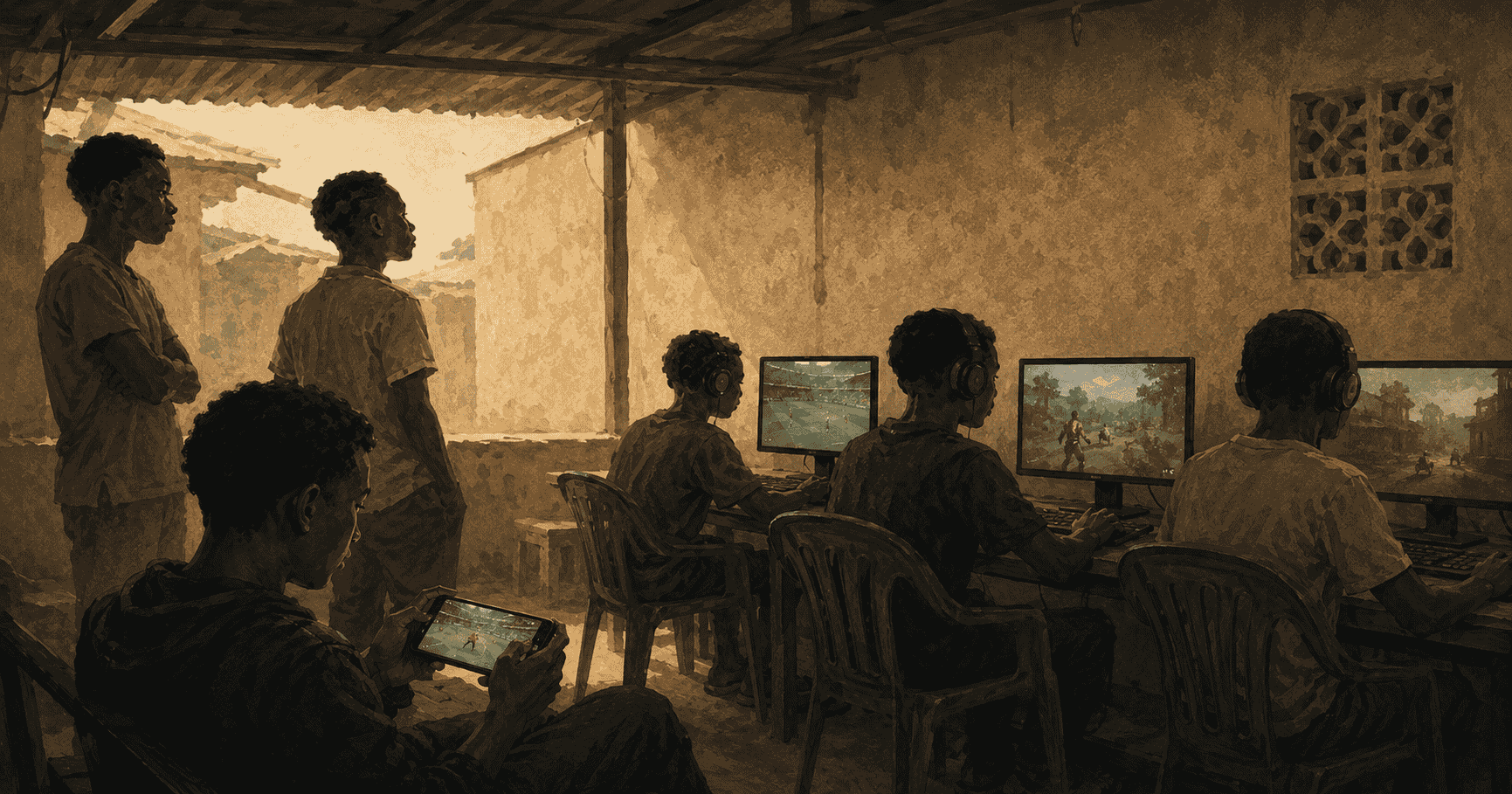
It matters to gaming cafés that need multiple units to serve customers, to tournament organisers who build competitions around FIFA, NBA 2K, Call of Duty, Mortal Kombat and other console-heavy titles. It matters to streamers and creators who rely on hardware access to create gaming content and it matters to esports teams trying to train consistently.
It also matters to young developers and creative entrepreneurs who are trying to understand where African gaming culture is heading.
If the console becomes harder to access, the whole structure around console gaming becomes harder to build.
This does not mean console gaming disappears in Africa.
It may be too culturally embedded for that. PlayStation, Xbox and Nintendo all carry strong aspirational value. In many homes, lounges and gaming centres, the console still represents a premium gaming experience. But the economics are becoming more difficult.
The more likely outcome is acceleration. Africa was already a mobile-first gaming market. The new console pricing crisis may simply push the continent further in that direction.
GeoPoll’s 2025 Gaming in Africa work covers markets including Kenya and Nigeria and describes a continent where gaming behaviour is being shaped by smartphone access, youth culture, digital payments and mobile-first habits. Games Industry Africa’s summary of the 2025 report says 91 percent of surveyed players identified mobile as their primary platform.
That statistic is important because it shows that African gaming is not waiting for consoles to become affordable. It has already found another route.
Mobile gaming works because the device already exists in the user’s hand. It fits the income reality of the market. It supports free-to-play models, social sharing, low-barrier discovery and flexible spending. It also connects more naturally to mobile money, data bundles, creator culture and the everyday digital habits of young Africans.
PC gaming may also benefit, especially through gaming cafés and shared access models. A dedicated gaming PC is not cheap either, but cafés can spread hardware costs across many users. For competitive gaming communities, this shared-infrastructure model may become even more important if individual console ownership becomes less realistic.
Then there is cloud gaming, the most tempting but also most complicated part of the conversation.
On paper, the logic is simple. If consoles are too expensive, stream the game. Let the processing happen elsewhere. Allow the player to access high-quality games through a phone, laptop, browser, smart TV or low-cost device.
For African markets, where hardware affordability is a major barrier, this sounds like the future. But the future is not automatic.
Cloud gaming depends on reliable internet, low latency, affordable data, supported payment systems, local or nearby server infrastructure, and official regional availability.
Xbox itself directs users to check supported countries and regions for Xbox products and services, and notes that services expand over time. That means cloud gaming may be part of Africa’s gaming future, but it cannot be treated as a complete solution until the infrastructure, pricing and platform support are in place.
This is the real tension. The same AI boom that is pushing console prices up could also accelerate the cloud infrastructure that gaming needs. But Africa’s access to that infrastructure remains uneven.
For African gaming, the lesson is clear. The industry cannot build its future around the assumption that global hardware will become cheaper and more accessible. It has to build around the realities of the market: mobile-first play, shared infrastructure, creator-led discovery, community tournaments, cafés, telco partnerships, local payment systems and eventually cloud access where it is properly supported.
This is also a challenge for brands, investors and policymakers. If gaming is one of the fastest-growing youth entertainment cultures on the continent, then access cannot be treated as an afterthought. The next stage of African gaming will not only be about who develops the best game. It will also be about who solves distribution, devices, connectivity and affordability.
Microsoft’s price increase arrives at a complicated time for Xbox. Earlier this year, Microsoft named Asha Sharma as CEO of Microsoft Gaming, now Xbox, replacing longtime gaming chief Phil Spencer, who is retiring after decades at the company. Reuters has also reported that Microsoft is expected to make further cuts around Xbox as the business faces cost pressure and strategic reset.
But for African markets, the bigger story is not simply Xbox’s internal reset is but what the price increase reveals about the future of gaming access.
The console is becoming more expensive at exactly the moment Africa’s gaming culture is growing. That creates a gap between global gaming ambition and local affordability. If that gap widens, the continent’s gaming future will continue to move toward the platforms and models that meet people where they are.
That means mobile will keep leading. Gaming cafés may become more important. PC-based communities may gain ground. Cloud gaming will remain an opportunity, but only if the infrastructure catches up. And console gaming, once the clearest symbol of premium gaming culture, may become even more exclusive.