
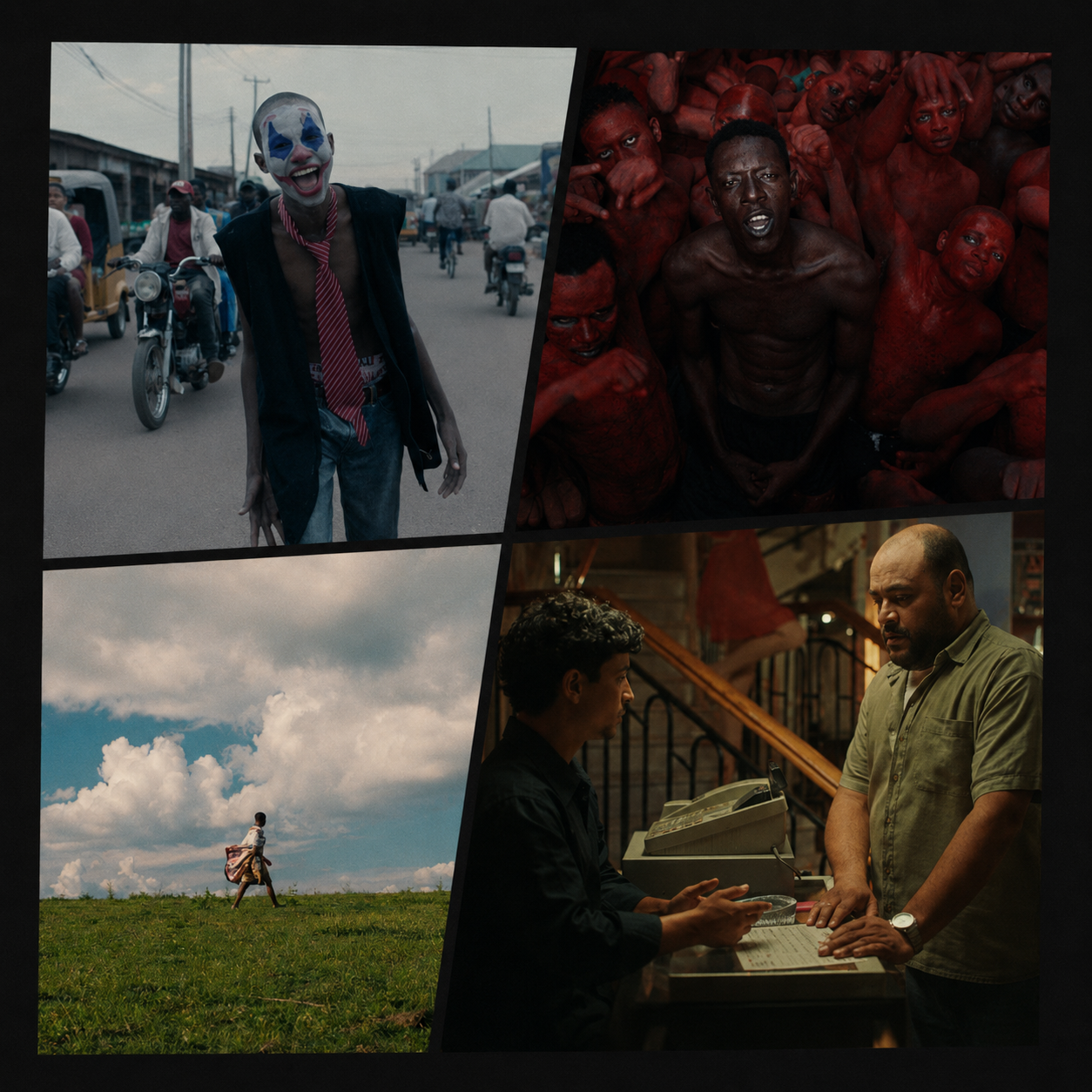
African cinema had a strong showing at the 2026 Tribeca Festival, with African and African-linked titles picking up awards across documentary, narrative, audience and short film categories.
The biggest winner was Jail Time Records, a Cameroon–United States documentary directed by Dione Roach and Steve Happi. The film won Best Documentary Feature, Best Cinematography in a Documentary Feature, and the Albert Maysles Award for Best New Documentary Director.
Set inside New Bell Prison in Cameroon, Jail Time Records tells the story of a music recording studio built within one of the continent’s most overcrowded prisons. It follows incarcerated artists who use music as a form of expression, identity and survival. That the film won three major awards at Tribeca is important not only because of the scale of the recognition, but because of the kind of African story being recognised.
This is not the polished, export-friendly version of Africa that global audiences are often more comfortable consuming. It is a story about incarceration, music, constraint and creative possibility. It is also a reminder that some of the continent’s most powerful stories are not always found in the most obvious places.
Nigeria also had a notable moment through Crocodile, the Nigeria–New Zealand documentary directed by The Critics and Pietra Brettkelly, which won the Viewpoints Award. The film follows young filmmakers in Kaduna who began creating science-fiction films with a phone, limited resources and an enormous amount of imagination.
For anyone who has followed the rise of The Critics, this recognition feels significant. Their story has always represented something larger than one film collective. It speaks to the reality of African creativity: young people building with what they have, often before formal systems arrive to support them.
In a stronger industry ecosystem, this kind of talent would not have to rely only on ingenuity, viral attention or foreign festival discovery to be seen. But their Tribeca recognition still matters. It shows that resource limitations do not automatically limit cinematic imagination.
Kenya and Nigeria were also represented through One Woman One Bra, directed by Vincho Nchogu. The film won the Audience Award for Narrative First Place, while its lead actress Sarah Karei received a Special Jury Mention in the Viewpoints category.
This is especially important because audience recognition says something different from jury recognition. It suggests that the film did not only impress a small group of industry professionals; it connected with festival audiences as well. For African filmmakers trying to move beyond visibility into actual audience-building, that distinction matters.
North Africa also entered the winners list through 32B, the Egyptian short film directed by Mohamed Taher, which won Best Narrative Short. Its win adds another layer to the African showing at Tribeca, proving that the recognition was not limited to one region, one style or one category.
Together, these wins tell a wider story.
African films are no longer simply appearing at global festivals as symbolic inclusions. Increasingly, they are competing, winning and shaping conversations across multiple sections of major festivals. At Tribeca 2026, African stories were recognised through documentary, fiction, shorts, audience voting and performance.
But this is also where the conversation must become more serious.
Festival wins are important. They bring visibility, press, industry attention and credibility. They can open doors for sales agents, distributors, streaming platforms, grants and future collaborations. For filmmakers working from African markets where funding, distribution and exhibition are still difficult, these wins can be career-changing.
But global recognition alone is not an industry strategy.
The real question is what happens after the festival. Do these films reach African audiences? Do they travel across cinemas, cultural centres, schools, streamers and community screening spaces on the continent? Do the filmmakers receive the support to make their next work under better conditions? Do these wins help build stronger local funding, archives, distribution pathways and professional networks?
That is where African film industries still have work to do.
Tribeca can recognise the work. Sundance, Cannes, Venice, Berlinale and Toronto can platform it. But African countries still need to build the systems that allow their own films to be financed, produced, circulated, preserved and watched by their own people.
This year’s African wins at Tribeca should be celebrated. They show the strength, range and imagination of African storytelling. They also show that African cinema continues to travel, even when the structures behind it remain uneven.
The win is not only that African films received awards.
The bigger win will be when recognition abroad begins to translate into stronger film ecosystems at home.