

African cinema is too often treated like a niche category, when in reality it holds some of the most urgent, inventive and historically important films ever made.
Across Senegal, Ghana, South Africa, Ethiopia, Egypt, Nigeria and beyond, filmmakers have used cinema to confront colonial violence, question identity, preserve culture, expose bureaucracy, document political unrest and imagine freedom.
This list brings together ten African films worth watching not only because they are “important,” but because they remain alive: formally bold, emotionally direct and deeply connected to the societies that produced them.
The films were selected from SCORE’s working list of African cinema recommendations, which includes their directors, countries, plot notes and runtimes.
Camp de Thiaroye — Senegal, 1988
Directors: Ousmane Sembène and Thierno Faty Sow
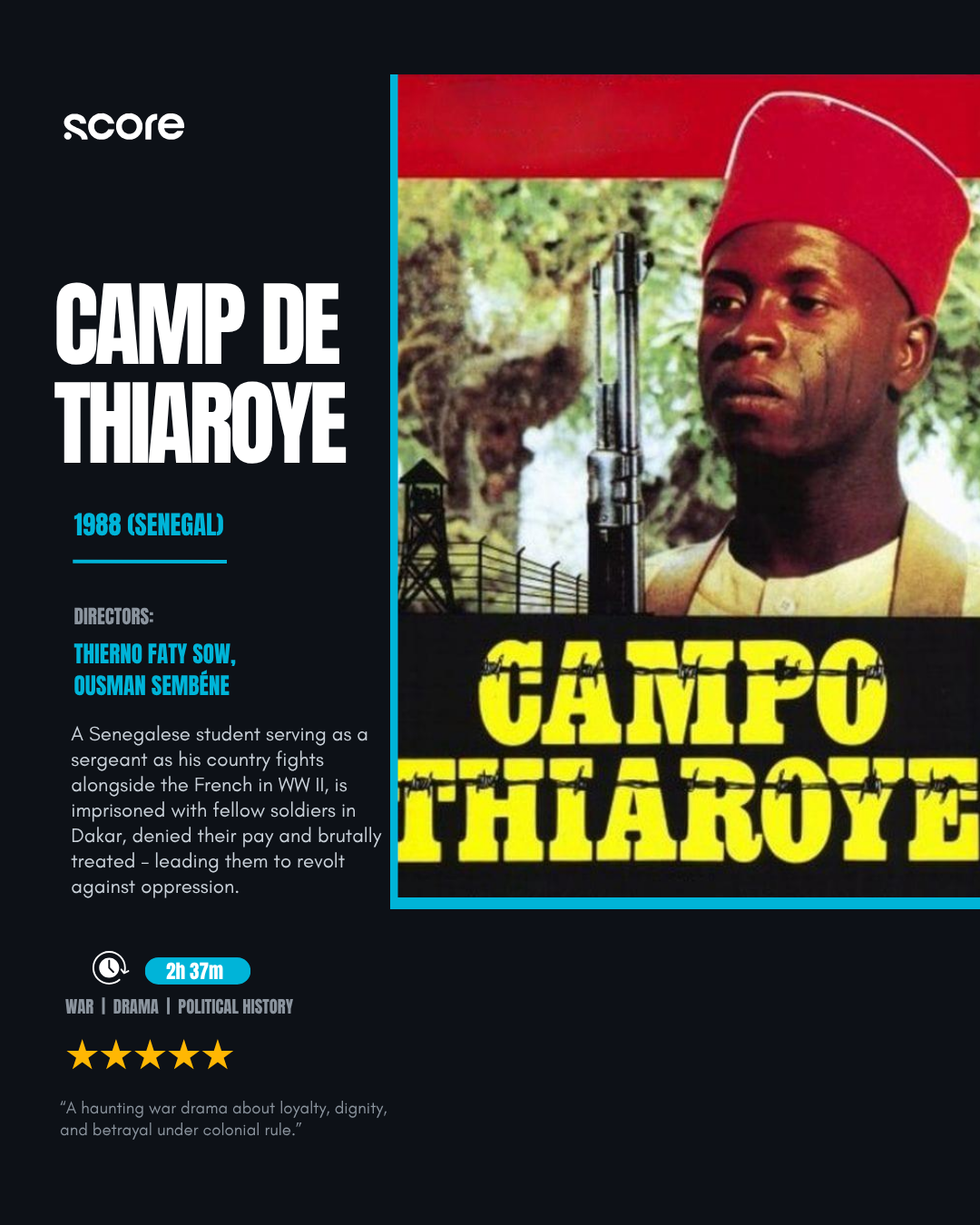
Set during World War II, Camp de Thiaroye follows West African soldiers who have fought for France, only to return to Dakar and face humiliation, delayed payment and brutal treatment from the same colonial power they served. The film’s story centres on soldiers held in a French military camp as their demand for dignity becomes a direct confrontation with colonial authority.
Ousmane Sembène, often called one of the fathers of African cinema, built a body of work that challenged colonialism, patriarchy, class power and corruption. Here, working with Thierno Faty Sow, he turns a historical injustice into a devastating political drama. The film won the Grand Special Jury Prize at the Venice Film Festival in 1988, and has also been widely discussed for its long suppression and censorship history.
Why watch it? Because it is not just a war film. It is a film about what happens when African lives are useful to the empire but disposable after service.
Lumumba — Congo, 2000
Director: Raoul Peck
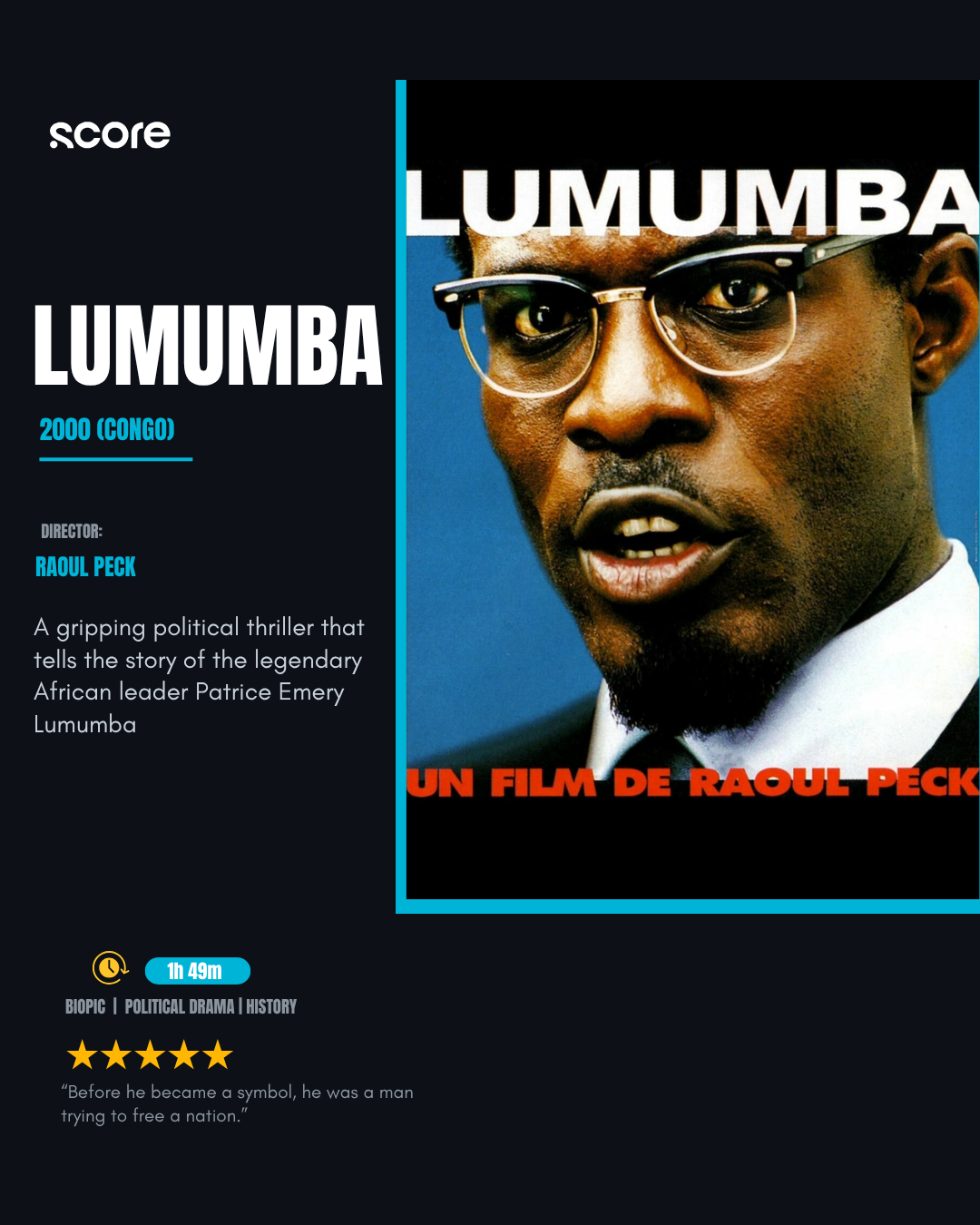
Lumumba is a political thriller about Patrice Emery Lumumba, the Congolese independence leader whose life and assassination remain central to conversations about African sovereignty, Cold War politics and postcolonial betrayal.
Raoul Peck, the Haitian filmmaker behind I Am Not Your Negro, approaches Lumumba not as a distant historical figure but as a man caught inside a dangerous political machine. The film is worth watching for how it compresses one of Africa’s most consequential political stories into a tense, accessible drama. It is both biography and warning: independence without real power can become another form of captivity.
Heritage Africa — Ghana, 1989
Director: Kwaw Ansah
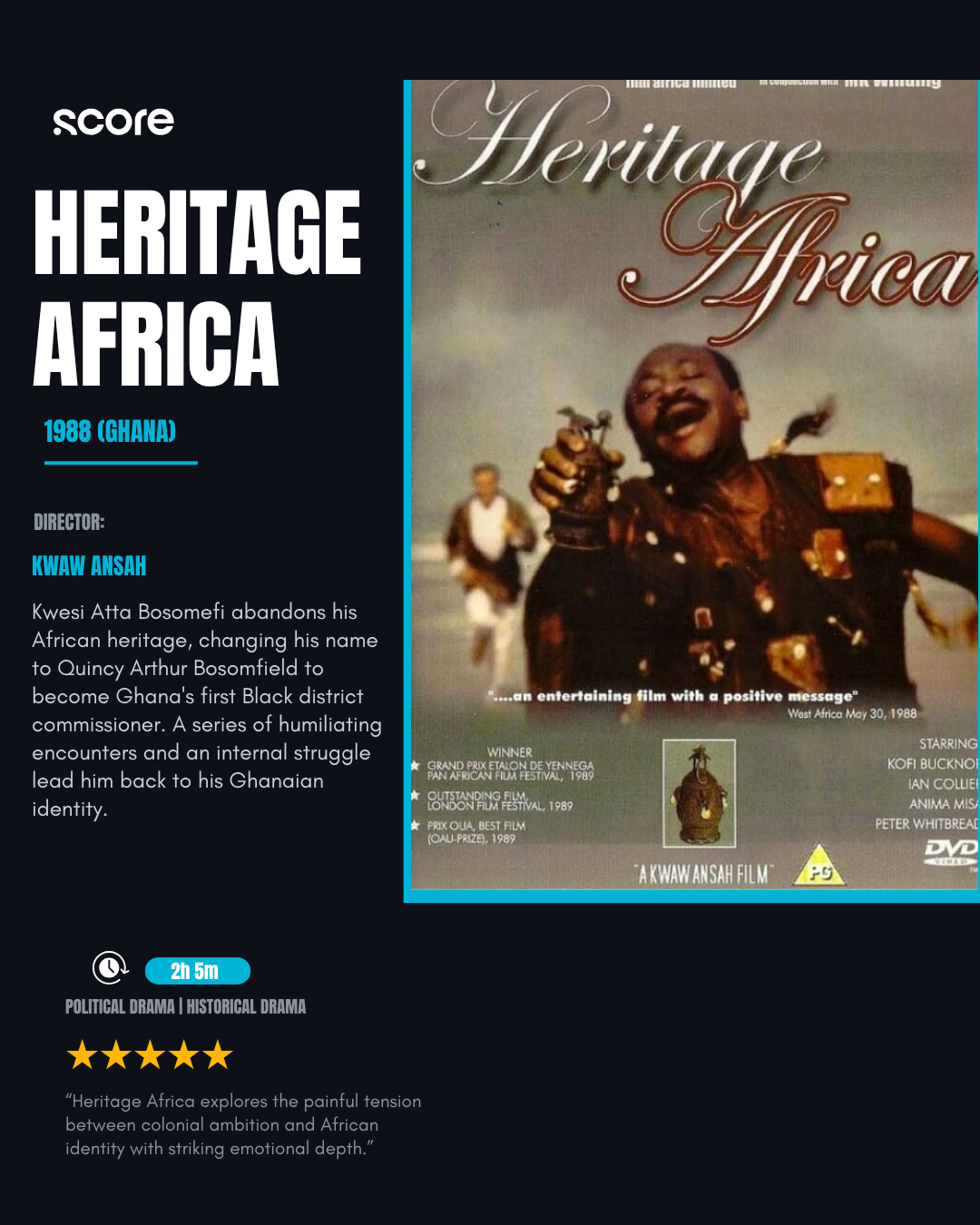
In Heritage Africa, Kwesi Atta Bosomefi abandons his African identity and reinvents himself as Quincy Arthur Bosomfield in his quest to become Ghana’s first Black district commissioner. But his rejection of his roots leads to humiliation, moral conflict and eventually a painful reckoning with who he really is.
Kwaw Ansah is one of Ghana’s major filmmakers, and Heritage Africa remains one of the country’s most significant films. It won the grand prize, the Étalon de Yennenga, at FESPACO in 1989, a major achievement for Ghanaian and Anglophone African cinema.
Why watch it? Because its questions still feel current. What does ambition cost when it requires cultural self-erasure? And what happens when success is measured by proximity to colonial power?
Tsotsi — South Africa, 2005
Director: Gavin Hood
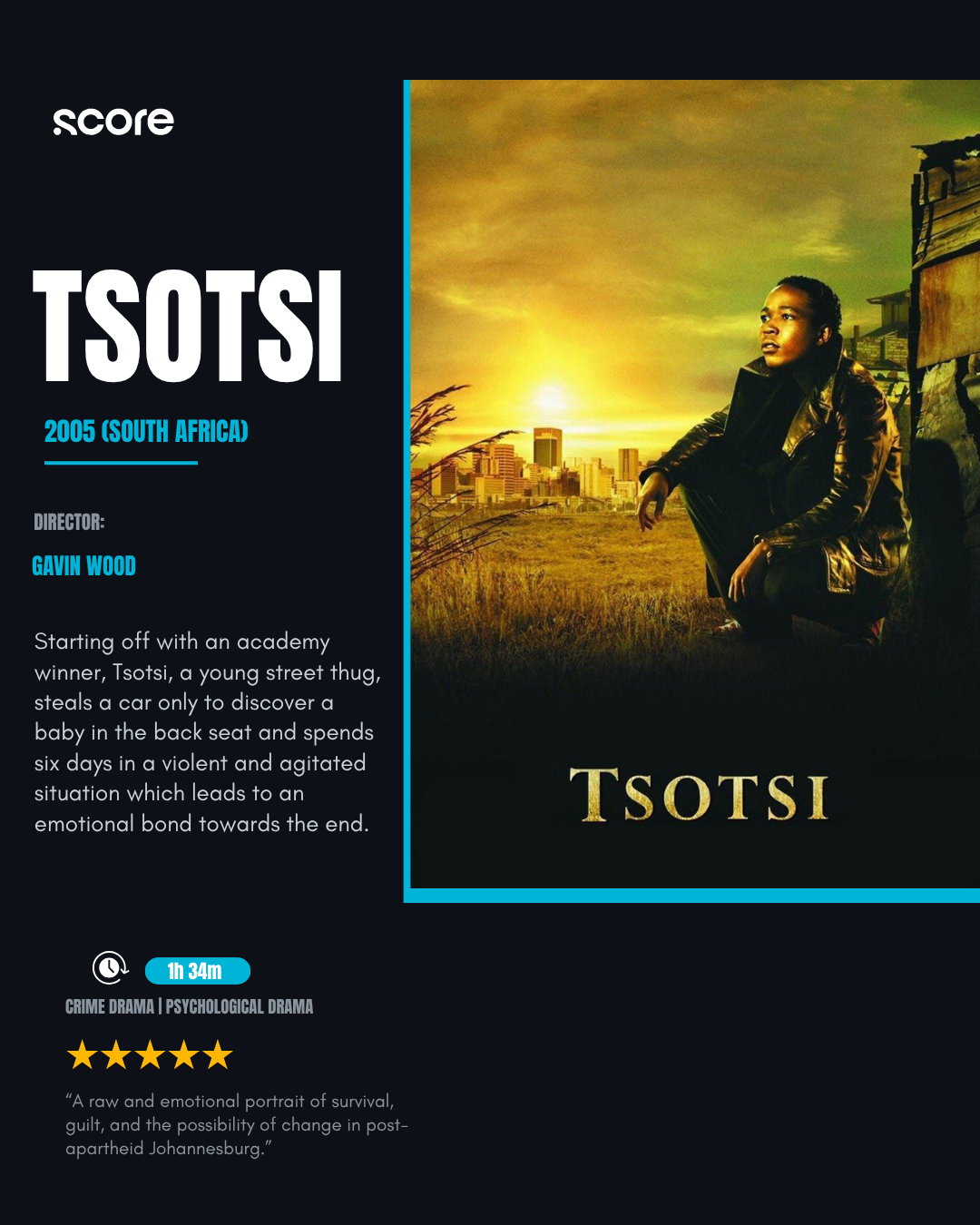
Tsotsi follows a young street criminal who steals a car and discovers a baby in the back seat. What begins as a crime story slowly becomes a study of violence, trauma, responsibility and unexpected tenderness.
Directed by Gavin Hood and based on Athol Fugard’s novel, Tsotsi won the Academy Award for Best Foreign Language Film in 2006, becoming one of the most internationally recognised South African films of the 2000s.
Why watch it? Because it refuses to flatten its central character into either villain or victim. It asks whether care can interrupt violence, even briefly, and whether redemption is possible in a society shaped by inequality.
Sankofa — Ethiopia/Ghana/US, 1993
Director: Haile Gerima
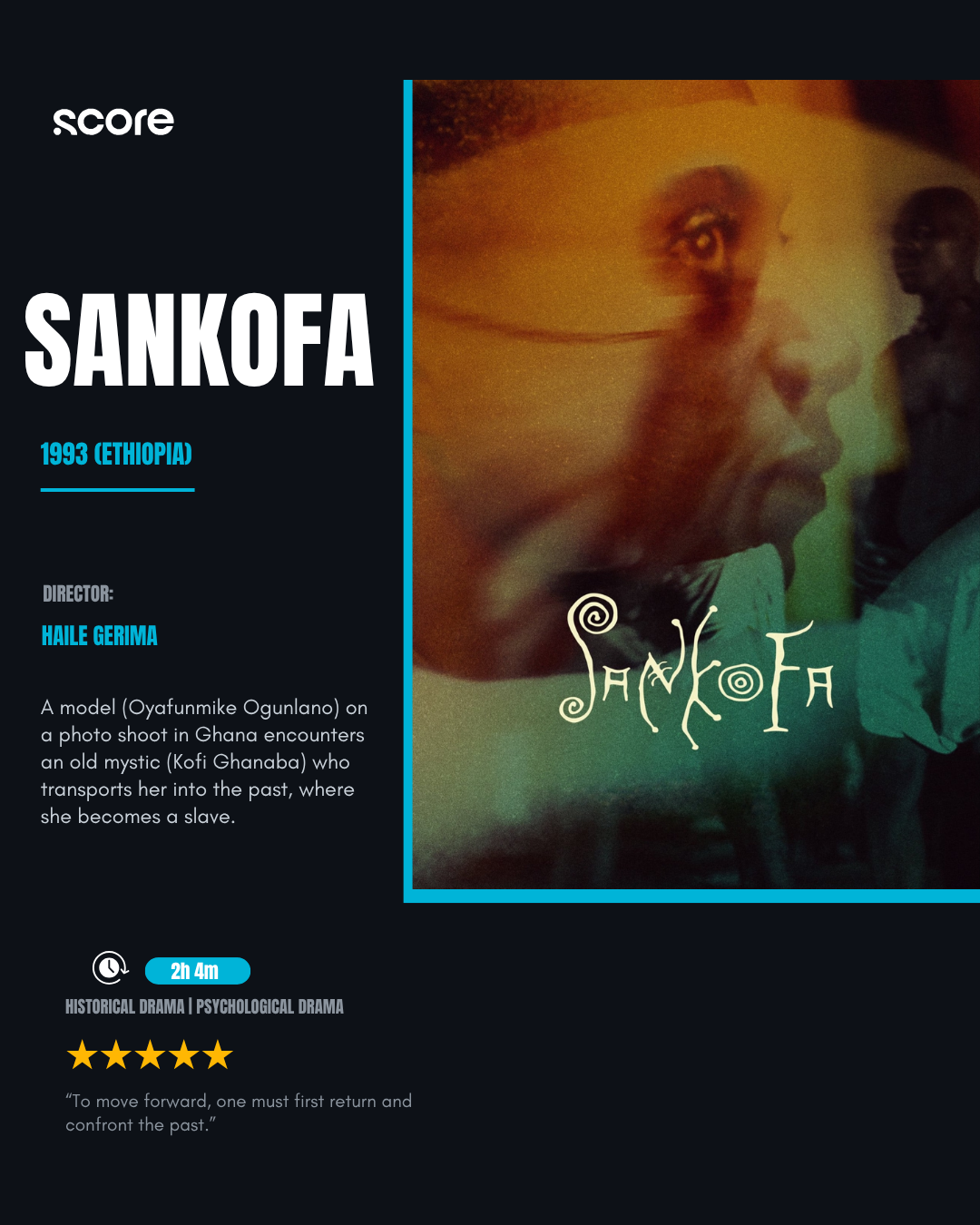
Sankofa begins with a model on a photo shoot in Ghana who is spiritually transported into the past, where she experiences life under slavery. The film uses this journey to confront historical memory, ancestral connection and the violence that modern society often tries to aestheticise or forget.
Haile Gerima is one of the most influential African and Black independent filmmakers, and Sankofa has become a landmark work in diasporic cinema. In 2021, Ava DuVernay’s ARRAY helped bring renewed attention to the film through a 4K restoration and re-release.
Why watch it? Because it treats memory as a responsibility. Sankofa is not comfortable viewing, but it is essential.
The Night of Counting the Years — Egypt, 1970
Director: Shadi Abdel Salam
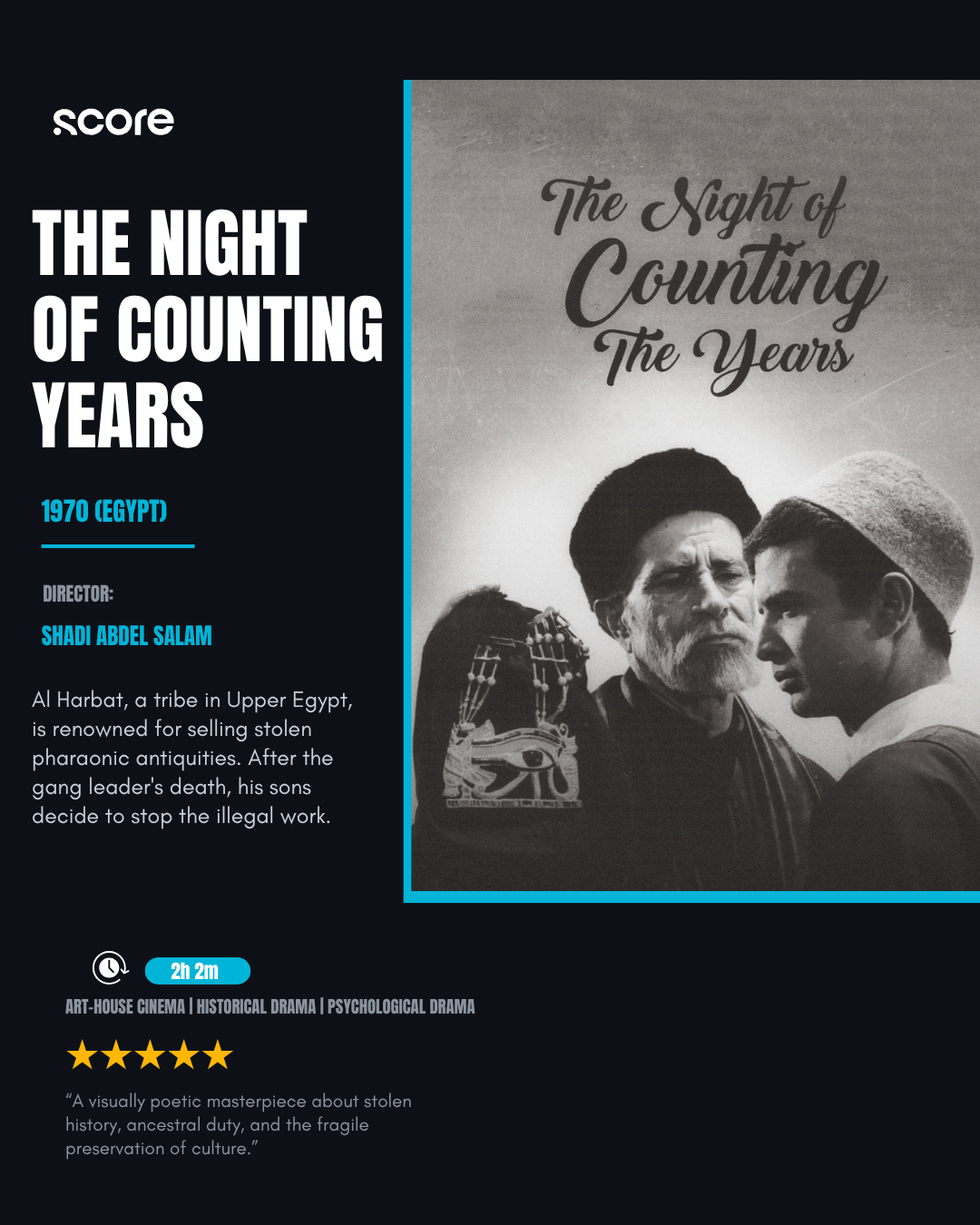
Also known as Al-Mummia, The Night of Counting the Years follows a tribe in Upper Egypt known for selling stolen pharaonic antiquities. After the death of the gang leader, his sons face a moral decision: continue profiting from the past or protect a heritage bigger than themselves.
Shadi Abdel Salam’s film is widely regarded as one of Egyptian cinema’s great achievements. Its visual style is austere, haunting and deeply concerned with the relationship between heritage, identity and national memory. The film was restored by The Film Foundation’s World Cinema Project in 2009.
Why watch it? Because few films ask such a powerful question so quietly: what do we owe the past?
My Father’s Shadow — Nigeria, 2025
Director: Akinola Davies Jr.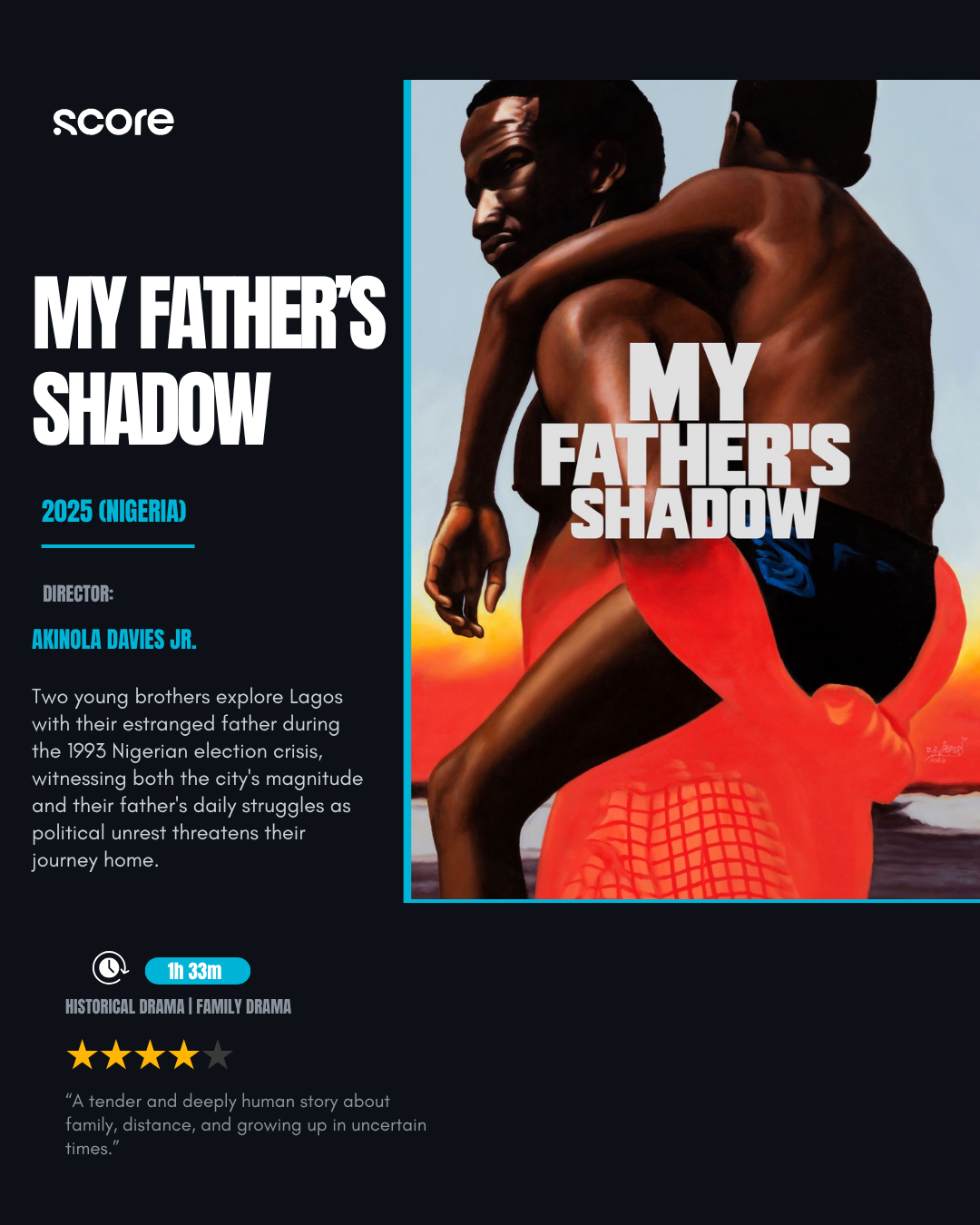
Set in Lagos during Nigeria’s 1993 election crisis, My Father’s Shadow follows two young brothers as they spend a day with their estranged father. Their journey through the city becomes both intimate and political: a story of family, masculinity, memory and a country on the edge.
Directed by Akinola Davies Jr. and co-written with his brother Wale Davies, the film made history as the first Nigerian film selected for Cannes’ official lineup, where it screened in Un Certain Regard. Cannes describes it as a semi-autobiographical first feature set over one day in Lagos.
Why watch it? Because it signals a new chapter for Nigerian cinema on the global stage: personal, cinematic, politically aware and emotionally grounded.
Mandabi — Senegal, 1968
Director: Ousmane Sembène
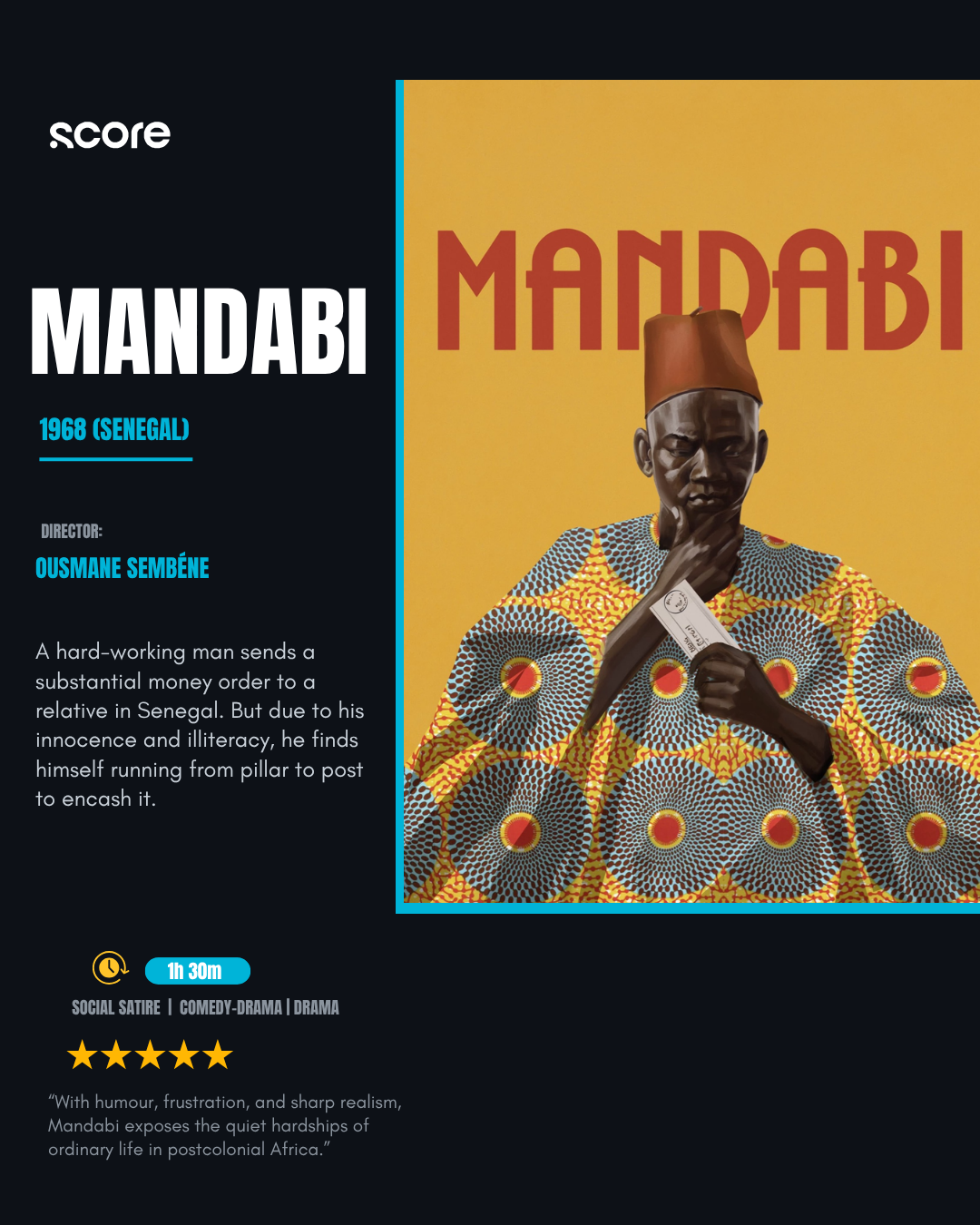
In Mandabi, a man in Senegal receives a money order from a relative abroad. But because of bureaucracy, illiteracy and social pressure, what should be a simple transaction becomes a humiliating journey through systems designed to frustrate ordinary people.
The film is one of Sembène’s most important works and is widely cited as the first feature film made in an African language, Wolof. It won the Special Jury Prize at the Venice Film Festival in 1968.
Why watch it? Because it shows how comedy can expose systems of power. Mandabi is funny, painful and politically sharp all at once.
The Last Ranger — South Africa, 2024
Director: Cindy Lee
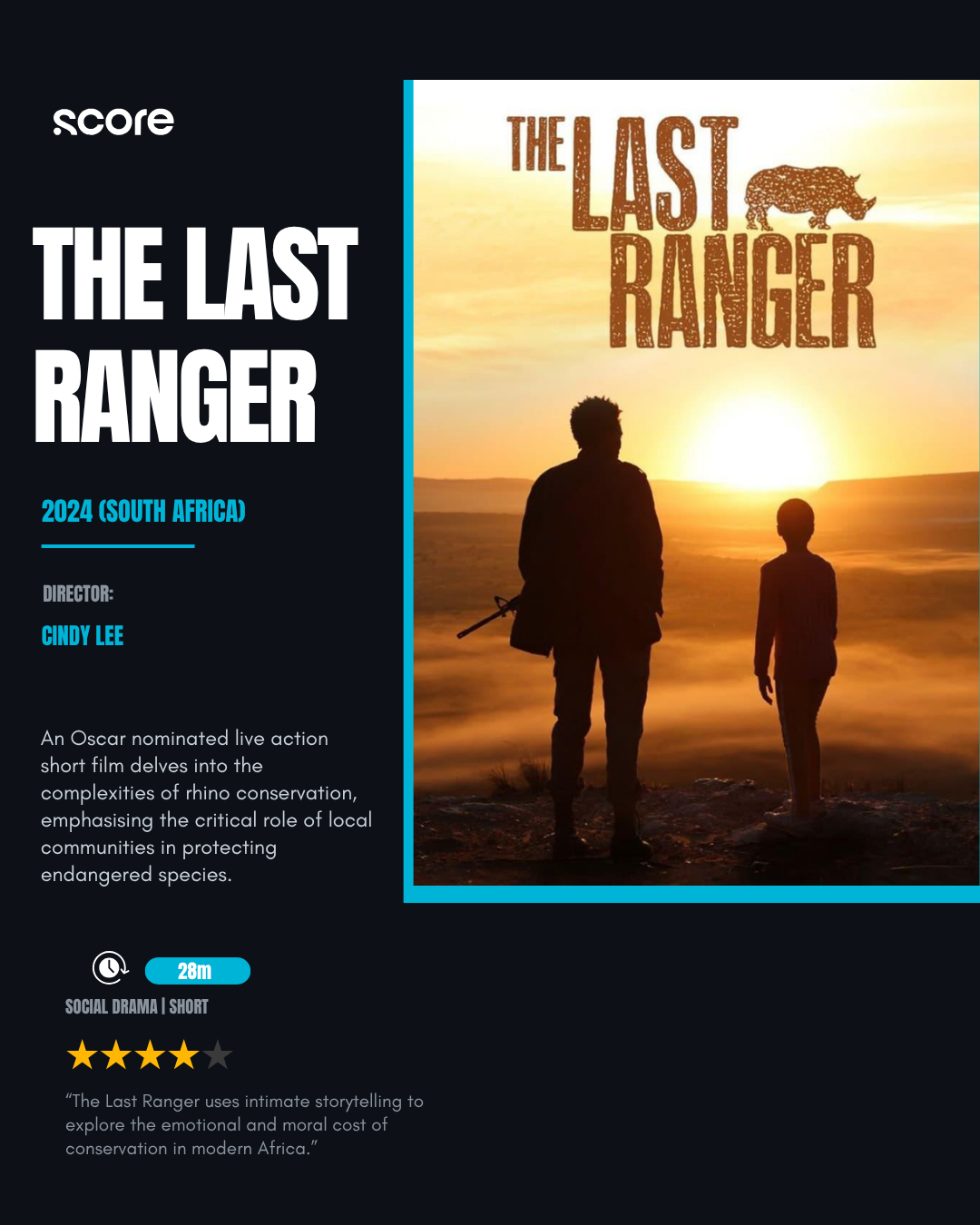
At only 28 minutes, The Last Ranger carries the emotional force of a feature. The Oscar-nominated live-action short explores rhino conservation in South Africa, centring the local communities and rangers whose lives are tied to the protection of endangered wildlife.
Directed by Cindy Lee, the film was nominated for Best Live Action Short Film at the 97th Academy Awards.
Why watch it? Because it treats conservation not as a distant environmental issue, but as a human story. It is about land, labour, danger, care and the people who carry the burden of protection.
Touki Bouki — Senegal, 1973
Director: Djibril Diop Mambéty
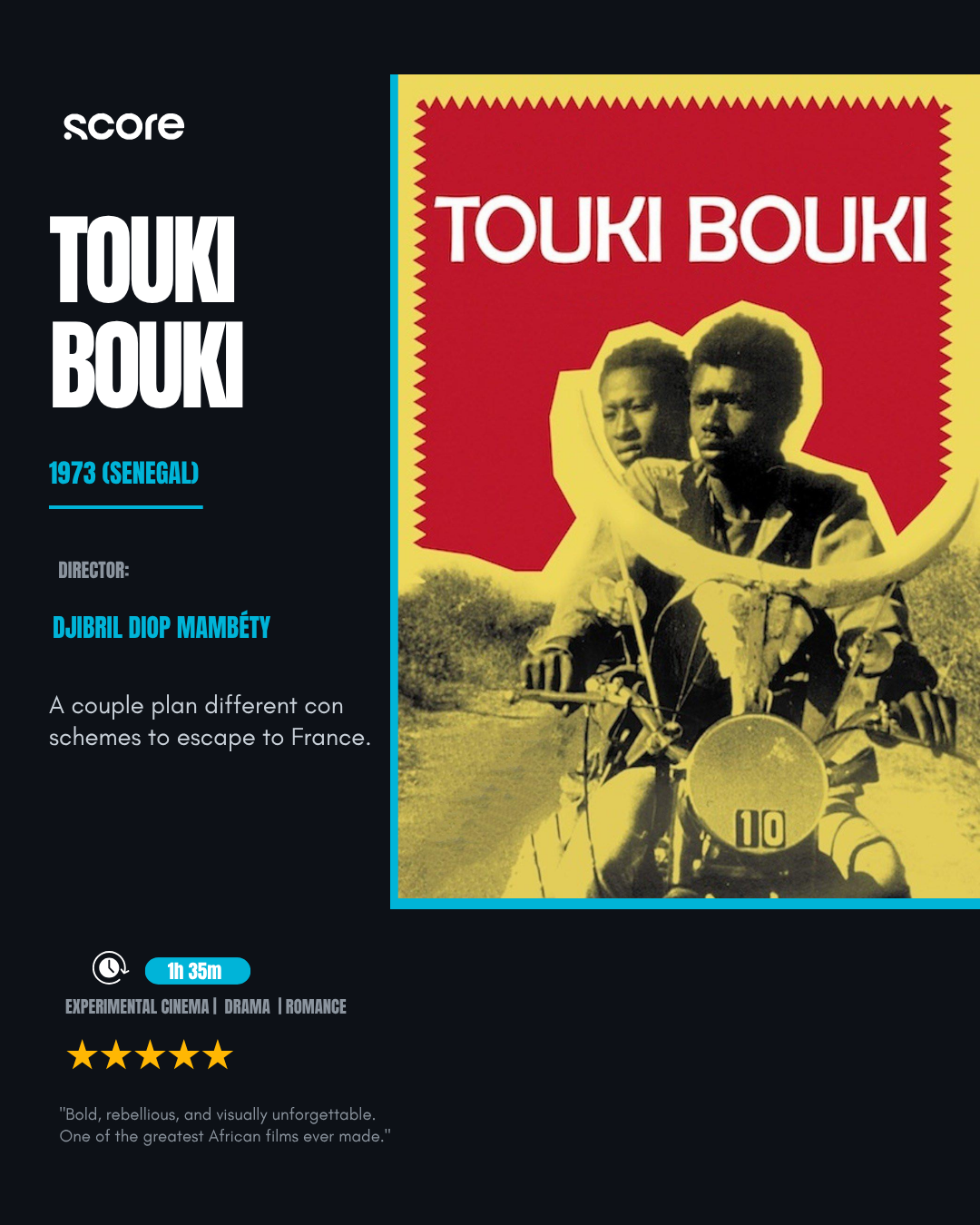
Touki Bouki follows a couple in Dakar who dream of escaping to France and devise schemes to make that dream possible. But the film is far more than a migration story. It is surreal, fragmented, stylish and restless — a film about desire, dislocation and the fantasy of elsewhere.
Djibril Diop Mambéty’s classic was restored in 2008 by the World Cinema Project and remains one of the most formally daring films in African cinema.
Why watch it? Because it still feels ahead of its time. Its energy, editing and symbolism continue to influence how African cinema can break form and still speak directly to real social longing.
Why These Films Matter
Together, these ten films show the range of African cinema: historical epic, political thriller, social satire, spiritual journey, conservation drama, coming-of-age story and experimental road movie. They remind us that African film has never been one thing.
For audiences who mostly encounter Africa through contemporary streaming titles, these films offer something deeper: a way to see how African filmmakers across generations have wrestled with power, identity, loss, imagination and survival.
They films must be respected but more importantly, must be watched several times!