Canal+ Acquires Nigerian Film "The Weekend" for 60+ Territories. Here's What this Means for African Film

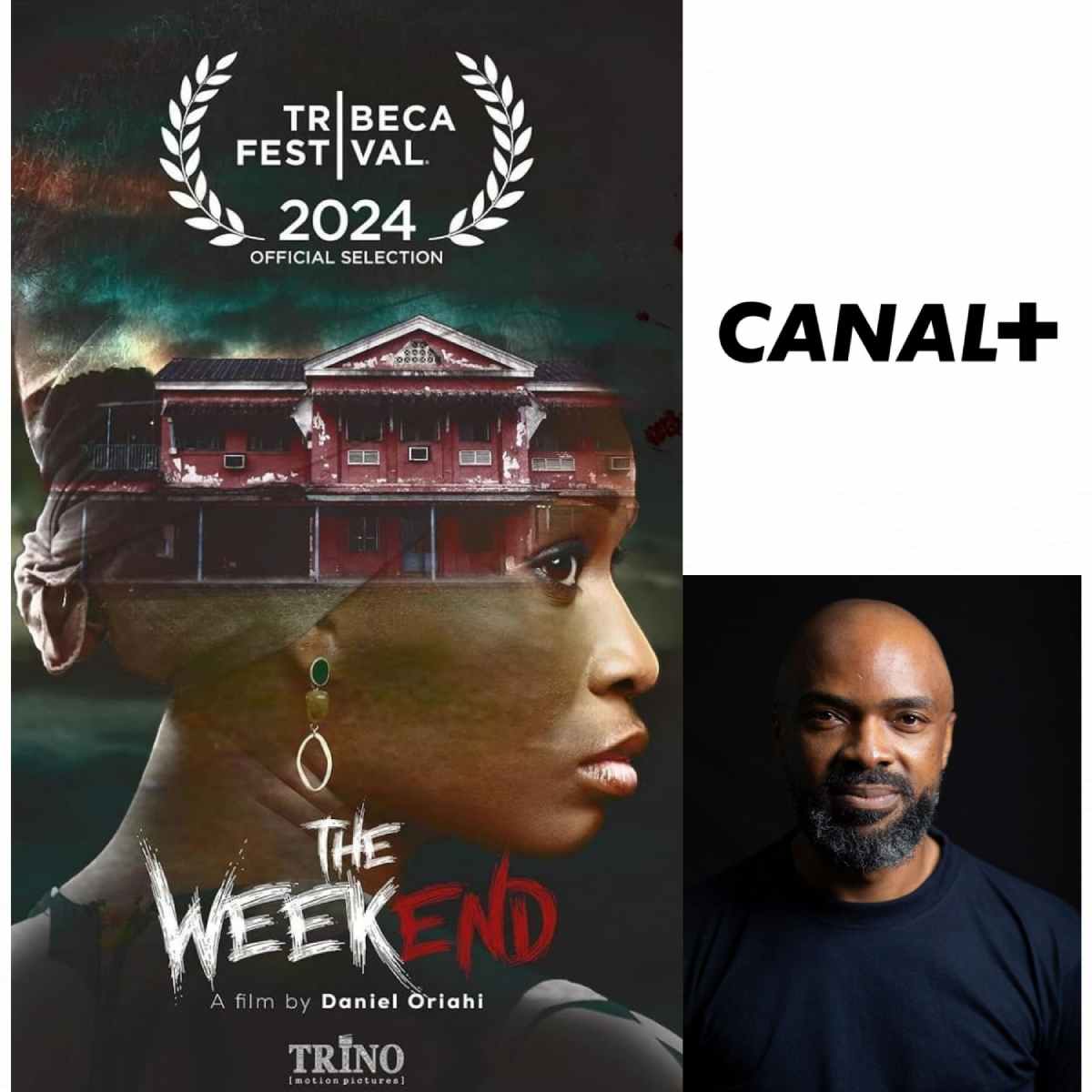
On 16 April, Trino Motion Pictures announced that its psychological thriller The Weekend had been acquired by Canal+ for a French-dubbed release across more than 60 French-speaking territories.
The rollout officially began on 1 April across Canal+’s linear television and streaming platforms in Africa, Europe, and French overseas territories.
For a Nigerian independent film, this is a significant milestone.
Directed by Daniel Oriahi and produced by Uche Okocha, The Weekend first premiered at the Tribeca Festival in 2024, becoming the first independently produced Nigerian film selected by the festival.
Since then, it has screened at the BFI London Film Festival, Screamfest, and NollywoodWeek Paris, while also picking up major wins at the 2024 Africa Movie Academy Awards.
But beyond the headline, the bigger story is not simply that Canal+ bought one Nigerian film. It is what the deal says about the changing economics and geography of African film distribution.
For years, the conversation around African films “going global” has mostly centred around Netflix, Prime Video, festivals, and diaspora audiences. Canal+ offers something different. It opens up a Francophone market that many Nigerian films have historically struggled to reach.
Francophone Africa is often treated as a separate ecosystem from Anglophone Africa, despite the fact that both markets sit on the same continent and often have similar viewing habits.
Nigerian films tend to circulate heavily in English-speaking markets, while Francophone audiences consume more French-language local content, European programming, and dubbed international films.
That is what makes this deal important. It suggests there is now growing value in positioning African films not simply as “local” titles, but as films that can travel across languages, regions, and platforms.
Canal+ itself has been expanding aggressively across Africa, particularly after taking effective control of MultiChoice in September 2025. The combined group now reaches audiences across close to 70 countries and over 40 million subscribers.
The Weekend is also notable because it is not a historical epic or a “social issue” film designed primarily for festivals. It is a psychological thriller. That matters because it shows there may be increasing international demand for African genre films that can compete on suspense, horror, drama, and entertainment value, not only on cultural significance.
At the same time, the acquisition raises difficult questions.
The first is around ownership and value. Deals like this sound impressive, but audiences rarely know how much money filmmakers actually make from them. A film can end up in dozens of territories without necessarily generating the kind of long-term revenue that transforms a production company.
The second question is whether African filmmakers are building enough infrastructure to repeat this kind of success. The Weekend did not arrive here by chance. It had a strong festival strategy, international sales support through iFind Pictures, critical acclaim, and a producer or team with a clear understanding of how global distribution works. Most filmmakers across the continent do not yet have access to those systems.
The Canal+ deal is therefore both an achievement and a reminder.
It shows that African films can move across borders at scale when the right systems are in place. But it also exposes how fragmented African film circulation still is, especially between Anglophone and Francophone markets.
The real test is whether this becomes a one-off success story or the beginning of a larger shift in how African films are distributed across the continent.