We've Traded Depth for Clicks. Now What? How Blogging Has Changed Ghana’s Entertainment Industry

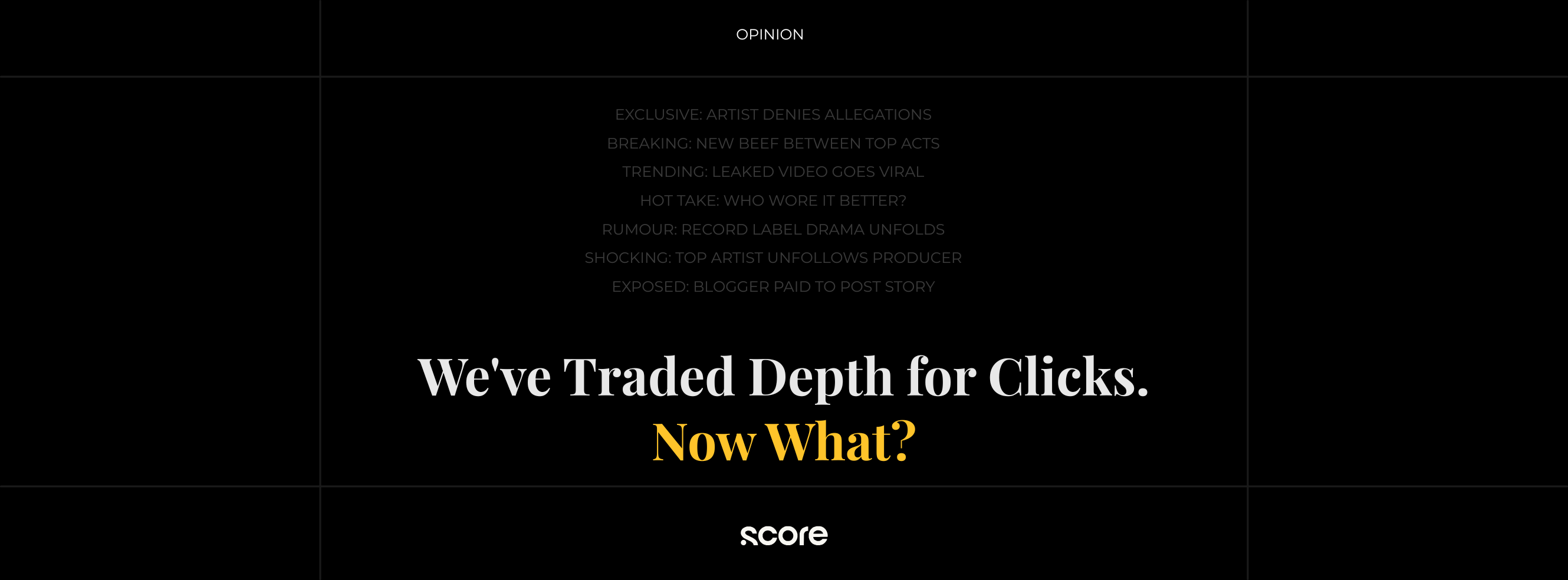
For a while now, I scroll through social media and it feels like everyone has become a blogger.
The blog era isn't slowing down. If anything, it has grown into something else entirely.
We are now in an attention economy where everyone is in the media, and almost no one is accountable.
This is not a slander on blogging.
Because at one point, blogging gave Ghanaian entertainment exactly what it needed.
Access.
At its best, blogging democratized information, created visibility for artists outside traditional media, and made the industry feel alive, fast, visible and participatory. It still does, if I'm being honest.
Ameyaw Debrah launched his blog in 2008, at a time when entertainment journalism in Ghana still moved at the speed of print and radio. He started by contributing to pan-African portals and editing for GhanaWeb, then built AmeyawDebrah.com into what many consider the country's first dedicated celebrity and entertainment platform.
Others followed. GhanaCelebrities.com, one of the earliest entertainment blogs. GhPage, Zionfelix, Nkonkonsa, etc. each built platforms that moved information faster than any newspaper or radio bulletin could.
These blogs expanded Ghanaian entertainment. Artists who had no radio plugs and no industry connections could be discovered through a blog post. Music, visuals, and stories that traditional media overlooked found audiences online.
But in expanding the industry, blogging also changed it.
When Everyone Became Media
Blogging reduced gatekeeping.
Suddenly, you didn't need to be a trained journalist or belong to a media house to publish. That shift was powerful. It decentralized power and handed the microphone to the public.
But it also came without structure.
No real editorial standards. No filtering mechanism and no shared sense of responsibility.
"Anyone with a phone and a ring light can assume the title of blogger.”
A New Media Association was launched in January 2023 partly in response to this reality, aiming to introduce professional standards, training, and ethical accountability to the space but we’ve seen absolutely no change.
The underlying motivation for blogging hasn't changed.
Speed.
If everyone can publish, the easiest way to stand out is to be first. Not necessarily to be accurate.
A 2020 monitoring exercise by the Media Foundation for West Africa tracked over 13,000 media programmes across Ghanaian outlets and recorded more than 1,700 ethical violations, with issues around decency, accuracy, and public sensibility being the most common.
News websites, in particular, were flagged for unregulated comment sections and content designed to provoke rather than inform.
So the question is: if everyone can speak, who decides what actually matters, what is ethical?
When Attention Became The Goal
Even traditional media platforms began adopting this style, reducing stories into quick, clickable newscards designed for engagement rather than understanding. The line between a media outlet and a gossip page became harder to draw.
As blogging grew, the focus began to shift.
It was no longer just about sharing information. It became about holding attention.
Headlines started being written to trigger reactions rather than inform. The more controversial the story, the more people talked about it. And the more people talked, the more valuable it became.
Over time, you could almost predict the cycle.
A statement. A reaction. A counter reaction. And then a full-blown "beef."
Controversy has become part of how the industry moved and not a by-product.
The Pay-for-post Culture
Then things became even more complicated.
Bloggers were no longer just observers. They became close to the people they were covering.
Promoters. Insiders. Gateways to visibility.
And with that came the rise of pay-for-post culture. This isn't speculation. It mirrors the same payola dynamic that has plagued Ghanaian radio for decades.
Now that dynamic has migrated online. When visibility depends on who you know and who you pay, access starts influencing coverage.
When the same person reporting a story is also benefiting from the subject of that story, it changes the nature of the work. It stops being purely about reporting. It becomes about positioning.
And once that line is blurred, credibility becomes harder to define.
What This Has Done to Artists
This shift has also affected how artists move.
Many are no longer thinking long-term. They are thinking about visibility in the moment.
What will get people talking now. What will trend now. What will be picked up by blogs now.
So you see careers built around viral moments and controversy rather than consistency and craft.
Not because artists don't have depth, but because the system does not always reward it.
In a system like this, being talked about can feel more important than being truly good.
Blogging still Matters…
Even with all of this, blogging still plays an important role.
It still breaks artists. It still documents moments. It still shapes public opinion.
Without it, many artists would remain unseen. Many bloggers have been credited by musicians for giving them early visibility when mainstream media overlooked them entirely.
So the issue is not blogging itself.
It is what the environment around it has encouraged it to become.
What the Industry Needs Now…
Ghana's entertainment industry needs more than visibility.
It needs clarity.
It needs platforms that take the time to explain what is happening, not just repeat it. Platforms that add context, not just noise.
Because entertainment is not just about what is trending. It is also about structure, business, and long-term growth.
The digital media space is too important to remain entirely unstructured.
The challenge is that audiences have become used to speed and style. But platforms still have the power to introduce something different; something more thoughtful.
It will take time. But it is possible.
The Reality
Ghana's entertainment industry did not lose depth overnight.
We traded it. Post by post, click by click, headline by headline.
And if we are being honest, all of us have played a role in that.
So the responsibility does not sit with bloggers alone.
It sits with all of us.
Journalists. Writers. Platforms. Artists. Audiences.
This piece is one way of starting that conversation.